
*By Albert & Terra Collver · May 29, 2026*
--
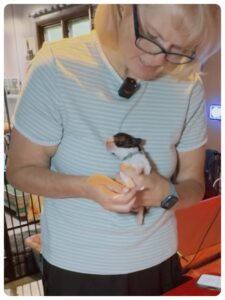
Today the Game On litter turns three days old — and Day 3 is the day a quiet but very important part of our puppy program begins. Today is the first session of **Early Neurological Stimulation (ENS)** and **Early Scent Introduction (ESI)** for every puppy in the litter, and Terra recorded a short demonstration so our prospective families (and anyone curious about how we raise our puppies) can see exactly what it looks like.
You can watch the full demonstration in about a minute and a half here:
What is ENS, and why do we do it?
Early Neurological Stimulation is a short, gentle exercise we perform with every puppy, once a day, from **days 3 through 16** of life. It was originally developed by the U.S. military's "Bio Sensor" — or "Super Dog" — program in the 1960s as a way of producing more resilient working dogs, and over the decades it has been adopted by reputable breeders across many sporting and working breeds.
The idea is simple: a few seconds of mild, controlled stress, delivered consistently during a narrow developmental window, helps a puppy's nervous and cardiovascular systems grow up better equipped to handle stress later in life. ENS puppies tend to have stronger hearts, a steadier response to novel situations, and an easier time recovering from the small "shocks" of normal life — a doorbell, a thunderstorm, a vet visit, a long car ride.
The five steps
Each puppy receives five exercises, in this order. Each one is brief — three to five seconds — and the whole sequence takes about a minute per puppy.
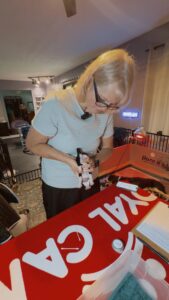
1. Tactile stimulation. A cotton swab is rubbed gently between the puppy's toes for three to five seconds.
2. Head erect. The puppy is held vertically, head up, for three seconds.
3. Head down. The puppy is gently inverted, head down, for three seconds, which briefly increases blood flow to the head.
4. Supine position. The puppy is held on its back, cradled in both hands, for five seconds.
5. Thermal stimulation. The puppy is placed for five seconds on a damp, cool towel that we keep in the refrigerator for the purpose. The temperature difference produces a small, healthy thermal reaction.
None of these are stressful for the puppy in any meaningful sense — at the end of the session each pup is right back in the whelping box, nursing, perfectly content. But each one is mildly novel, and that novelty is the whole point.
And then — Early Scent Introduction
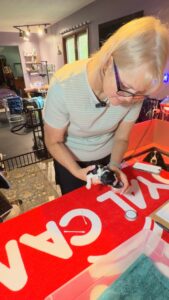
The moment ENS is done, we move directly into ESI — Early Scent Introduction. Each day from day 3 through day 16, we present each puppy with a new, distinct scent, and let them investigate it for a few seconds. The scent for Day 3 is **soil**. Over the next two weeks the puppies will meet pine, cinnamon, star anise, lavender, black tea, tennis ball, coconut, leather, rabbit, chamomile, cloves, and lemongrass, with two days set aside for nail trims paired with familiar scents.
Like ENS, ESI is a small daily discipline with an outsized payoff. Puppies whose noses are gently introduced to a wide range of scents during this window grow into adult dogs who use their noses more confidently, more readily, and with better discrimination — exactly what you want in a Spaniel.
Where this fits in the bigger picture
ENS and ESI are the very first formal pieces of our eight-week puppy program. From here we move into Puppy Culture protocols, novel-surface and sound exposure, the early-handling exercises that teach a puppy to be comfortable having its ears, paws, and mouth touched, and — at about six weeks — the first introductions to birds, water, and the sound of gunfire. Around seven weeks each puppy goes through a Volhard temperament evaluation, and shortly after that we match each puppy to the family who will give it the best home.
It is a great deal of small, daily work, and we believe it shows in the dogs.
Stay tuned for daily Game On litter updates here on the blog, on YouTube, and in our private Facebook buyer group.
— *Albert & Terra*

Hey Terra
Thanks for working with the puppies to help them become great dogs. It’s interesting that such small stimuli will help them better adapt as adults. Thank you for sharing this information.