The word agility comes from the Latin agilis—”quick, nimble, easily moved.” At an agility practice at WestInn Kennels on July 21, 2026, Terra and BlazE gave the word its full meaning. It was, by any measure, a very good run.
This was practice, not a trial—no judge, no ribbons, just the two of them working the course. You can watch it here:
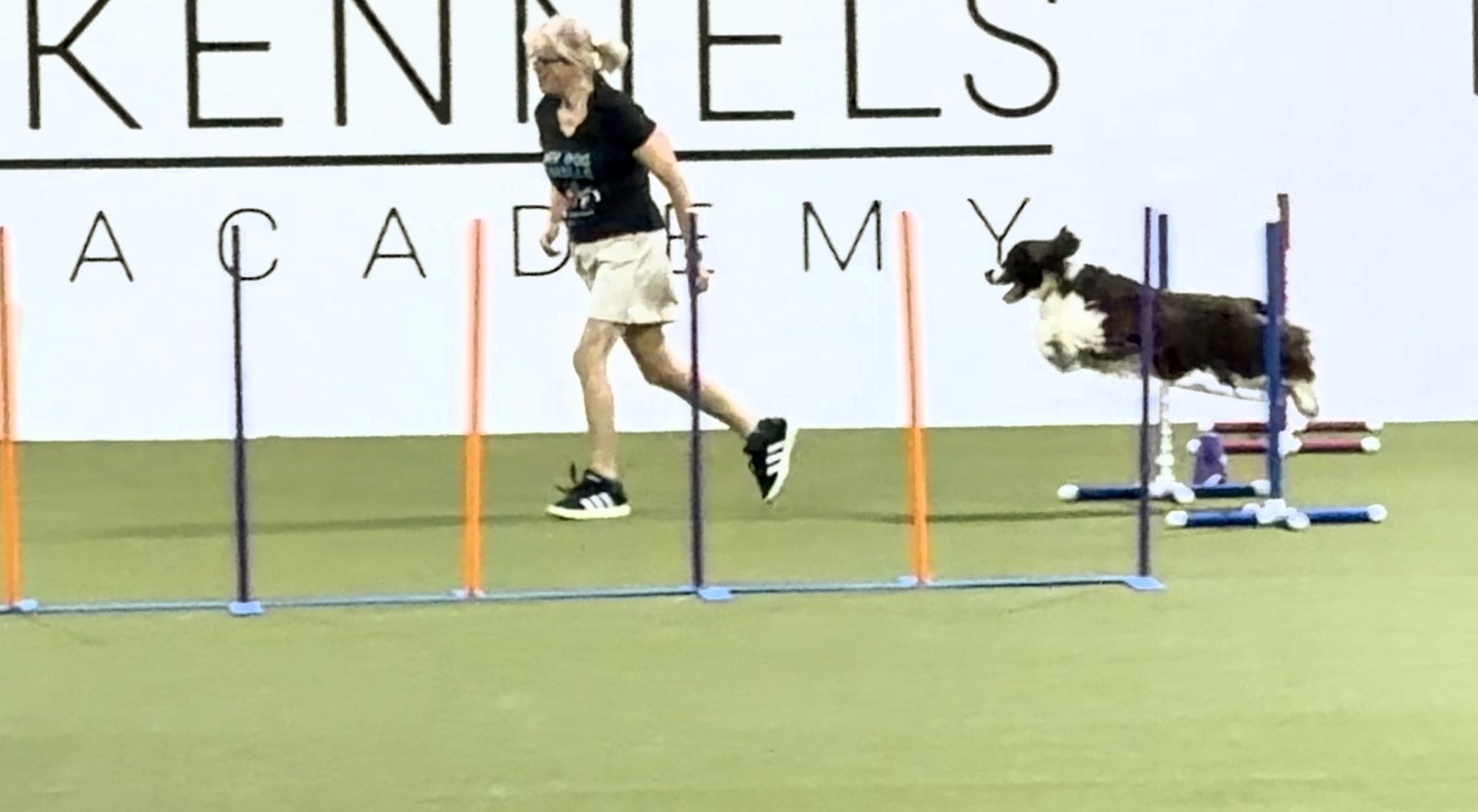
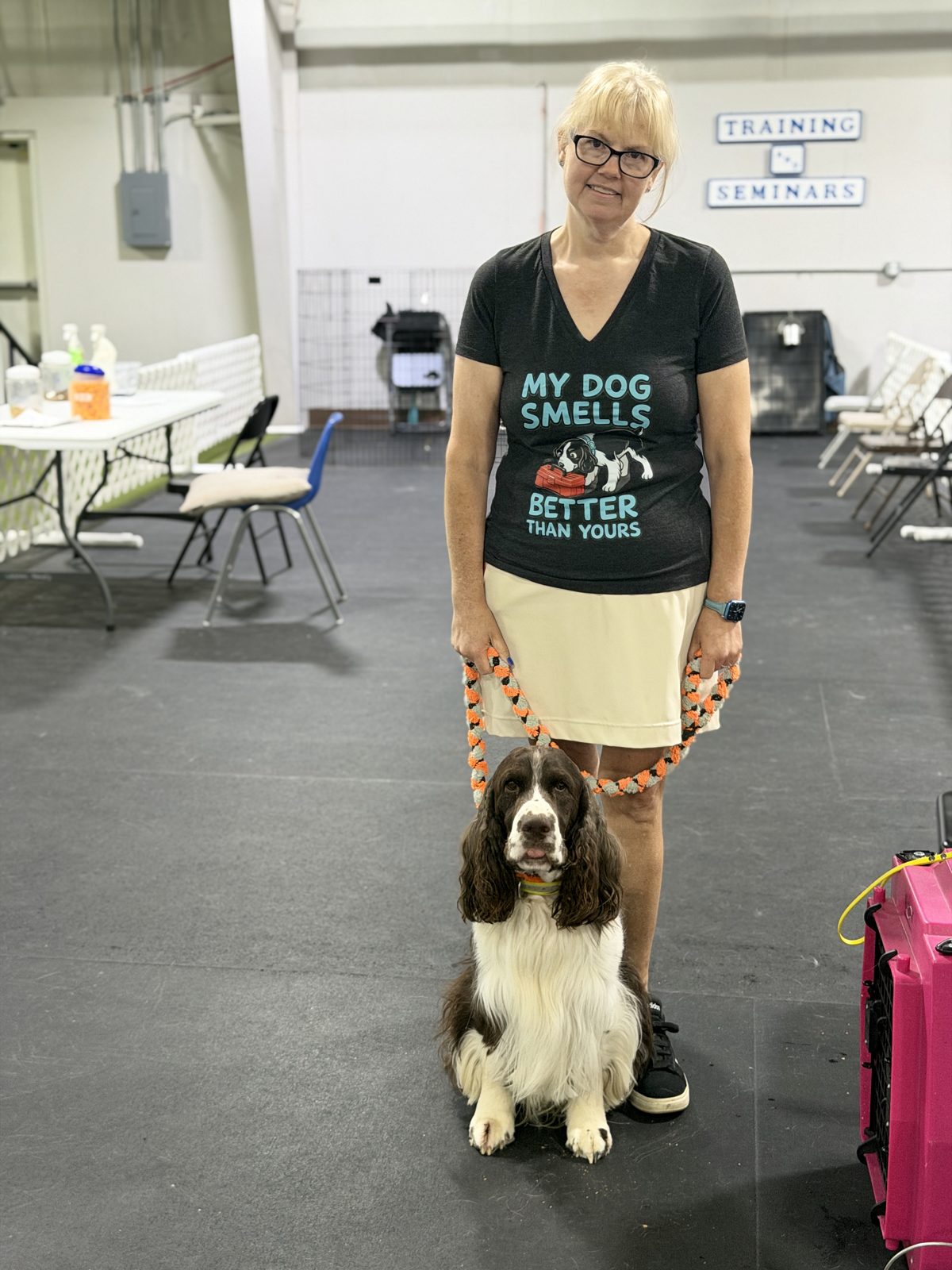
BlazE, our English Springer Spaniel, is better known for his nose and his birds than for the agility ring—but he takes to a course the way springers take to most things: with more enthusiasm than the equipment strictly requires. In this practice run he stayed with Terra through the turns, hit his jumps in stride, and kept his focus from the first obstacle to the last. When a springer commits to a course, he is a joy to watch, and BlazE committed.
What agility is, and why it counts as a sport
For anyone who has only seen it in passing on television, agility is one of the American Kennel Club’s companion sports—a category that also includes obedience, rally, and tracking. The premise is simple to describe and hard to master: the handler directs the dog, off leash, through a numbered course of obstacles in the correct order and against the clock. No treats, no toys, no leash. The dog runs on voice and on the handler’s body—a turned shoulder, a shift of weight, the timing of a called cue.
A standard course draws on a familiar set of obstacles: jumps, a set of weave poles, tunnels, and the contact obstacles—the A-frame, the dogwalk, and the seesaw—so named because the dog must touch a painted “contact zone” on the way down. Some classes add a pause table. Others, like Jumpers With Weaves, strip the course down to jumps and weaves and simply ask for speed and precision.
In competition, scoring rewards both accuracy and pace. A run is judged for faults—a dropped bar, a missed contact, an off-course obstacle, refusals—and against a standard course time. A run that is clean and inside the time earns a qualifying score, the “Q” that handlers talk about. String enough Qs together at each level—Novice, Open, Excellent, and Masters—and the dog earns titles, the letters that follow a registered name. It is a sport built on the ordinary miracle of a dog choosing, again and again, to work with a person rather than for a treat. That partnership is exactly what a practice session like this one is for.
AKC agility has only been an official event since 1994, which makes it young as dog sports go, but it has become one of the association’s most popular. It rewards exactly the qualities a springer was bred to bring to a field: drive, a good working relationship with a handler, and the willingness to turn on a dime and keep going.
A good run
What made July 21 a good run was not a ribbon—there were none to hand out at a practice—it was the partnership. BlazE watched Terra, Terra trusted BlazE, and for a minute or so on the green turf floor at WestInn Kennels the two of them moved as one animal. In a trial, the clock is how they keep score; at practice, the reward is simpler—a dog and a handler who read each other a little better than they did the week before.
There is a longer game here, too. BlazE is the sire of our current Game On litter, and a run like this is a reminder of what we hope he passes on. He is a genuinely versatile dog—a good nose, a bird in mind, and the drive to try whatever is asked of him—and our hope is that several of these puppies will grow up every bit as versatile as their father.
Well done, both of you.
